Hotline: +6011-6287 8580



Hotline: +6011-6287 8580




Do you frequently experience neck and shoulder stiffness, lower back pain, or joints that crack and pop during movement? These issues often stem from imbalances and adhesions within the sinew channels (fascia and tendons). Ma Kuang TCM's Johor Bahru clinics now offer professional Bojin therapy — a traditional Chinese medicine sinew treatment performed by registered TCM physicians or trained therapists to systematically release sinew adhesions and relieve pain at its root.
Bojin, also known as "Meridian Sinew Therapy," is a traditional manual therapy grounded in the TCM theory of the Twelve Sinew Channels. The sinew channels are an integral part of the meridian system, encompassing the body's muscles, tendons, ligaments, and fascia. Their function is to bind the skeleton, facilitate joint movement, and conduct the flow of Qi and blood.
When the sinew channels become restricted, contracted, or stagnated due to overuse, injury, wind-cold-damp invasion, or prolonged poor posture, pain, stiffness, and limited movement can result. Bojin therapy involves the practitioner using the thumbs, heel of the palm, or specialised tools to apply plucking, pulling, pressing, and pushing techniques along the sinew pathways, with the aim of:
While Bojin shares similarities with modern Western myofascial release, it places greater emphasis on systematically clearing the sinew pathways and integrating overall meridian balance with targeted manual therapy.
Many patients confuse Bojin with Tuina. While both are TCM manual therapies, they differ in their focus and approach:
| Comparison | Tuina Massage | Bojin Therapy |
| Theory | Meridian acupoints & zang-fu pattern differentiation | Twelve Sinew Channels & fascial system |
| Target | Meridian Qi & blood, internal organ regulation | Muscles, tendons, fascia & ligaments |
| Techniques | Broad strokes — pushing, kneading, pressing, point stimulation | Targeted — plucking, pulling, flicking, fascial release |
| Approach | Harmonising Qi & blood, addressing both internal & external | Focused on structural soft tissue release |
| Best For | Internal regulation, sub-health management, stress relief | Musculoskeletal pain, sports injuries, fasciitis |
At Ma Kuang TCM, both therapies can be performed independently or combined based on your physician's assessment for the best possible outcome.
A properly administered Bojin treatment can deliver the following benefits:
Ma Kuang TCM's Bojin therapy is particularly well-suited for the following conditions:
If you are unsure whether Bojin therapy is suitable for your condition, we recommend consulting a Ma Kuang TCM registered physician first for a professional assessment and personalised treatment plan.
Q1: Is Bojin therapy painful?
During treatment, patients typically experience varying degrees of soreness and a distending sensation — this is more noticeable in areas with heavier adhesions. This feeling is what TCM refers to as "De Qi" (arrival of Qi), indicating that the sinew channels are being effectively cleared. Our physicians will adjust the pressure in real time based on your comfort level. Please let us know immediately if you feel significant discomfort and we will adapt our technique accordingly.
Q2: How many sessions does it take to see results?
Results vary depending on the severity of your condition, how long you have had it, and your individual constitution. Some patients with acute symptoms notice significant improvement after just 1 to 2 sessions. Those with chronic pain or long-standing adhesions typically require a structured course of 4 to 8 or more sessions, alongside lifestyle adjustments, to achieve stable and lasting relief. Your physician will provide a personalised treatment recommendation after your initial assessment.
Q3: Is it normal to have bruising or marks after Bojin treatment?
Some patients may notice mild redness or bruising at the treated area, particularly where fascial adhesions are more severe. This is a normal response — it reflects local Qi and blood being cleared and minor capillary expansion. It typically fades on its own within 1 to 3 days and requires no special treatment. If the bruising is extensive or persists beyond one week, we recommend returning for a follow-up consultation.
Q4: Can pregnant women receive Bojin therapy?
Pregnant women should exercise extra caution. Bojin on the lower back and abdomen is generally not recommended during pregnancy. Treatment on other areas may be considered, but only after a thorough assessment by a TCM physician taking into account the stage of pregnancy, symptoms, and overall health. If you are pregnant, please inform our team when making your appointment so that we can arrange a suitable consultation for you.
Q5: Can Bojin therapy improve skin and facial concerns?
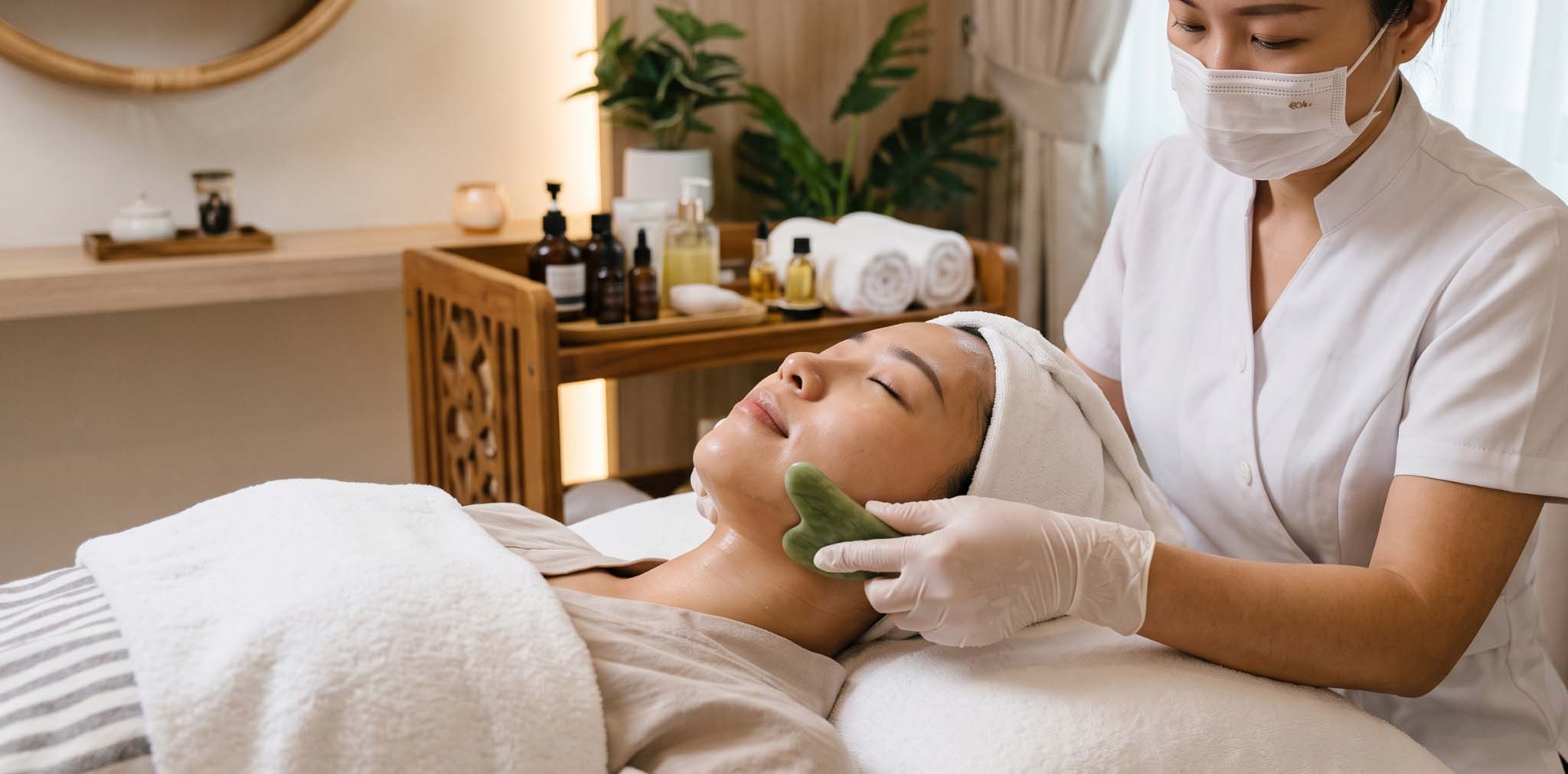
Yes. Facial Bojin — the application of Meridian Sinew Therapy to the face — is an important branch of Bojin treatment. By gently clearing and releasing the facial sinew pathways, it promotes facial Qi and blood circulation and lymphatic drainage, helping to reduce dullness, ease puffiness, improve skin elasticity, and soften fine lines. TCM holds that "when Qi and blood rise to nourish the face, the complexion becomes radiant." Full-body sinew clearing also works from within to improve overall skin quality. Facial Bojin is especially popular among women seeking a natural approach to skin rejuvenation and anti-ageing care.